
Logo design

First impressions are formed in just a few seconds, which is why website design is critically important. Our UX/UI design specialists ensure that your website is not only visually appealing but also intuitive and easy to use—helping build trust and attract visitors.
In today’s digital landscape, standing out is becoming increasingly challenging, but well-thought-out and professionally executed design remains the foundation of success. Our team creates distinctive solutions based on continuous communication with the client—we identify your business values and goals and translate them into a website design that truly represents your brand.
Create a strong first impression and achieve more with our help!
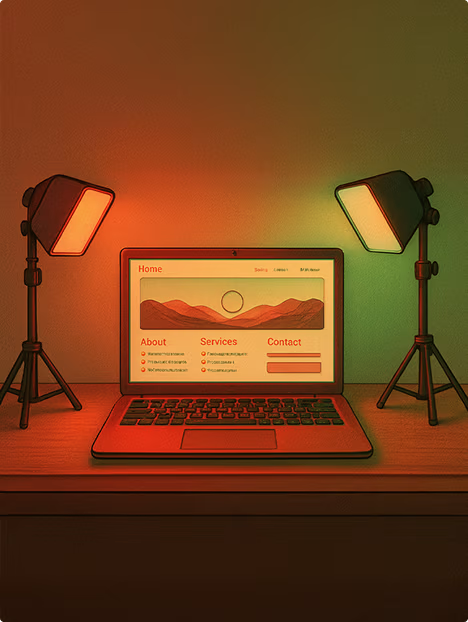
Information gathering (logo, brand book) is the first step in creating or updating a website, ensuring a consistent brand identity.
Key visual assets are collected, including the logo, brand book, color palette, typography, and style guidelines. This information helps create a cohesive design that aligns with the brand identity and delivers a professional user experience across all visual communication channels.
Competitor visual identity review is an analysis of how direct competitors visually communicate their brand.
Logos, color palettes, typography, design elements, and overall style consistency are evaluated. The results help identify market trends, differentiate your brand, and create a unique, competitive visual solution.
Target audience UX/UI needs analysis is the process of identifying user expectations, behavior, and interaction patterns with website design.
User testing is conducted alongside analysis based on demographics, behavior, and device usage. The insights help optimize navigation, page layouts, interactive elements, and design solutions to ensure a smooth, intuitive, and conversion-focused user experience.
Navigation design (site map, menu) involves planning the website structure and user journey to ensure clear content organization and intuitive navigation.
A site map is created with primary and secondary pages, and menu items and links are planned accordingly. The goal is to help users easily find information, quickly access key pages, and increase conversions and engagement.
A prototype (wireframe) is a visual layout of the website’s structure and key elements created before the design phase begins.
Creating a wireframe provides a clear view of page layouts, navigation, content blocks, and user interactions. This helps identify potential issues at an early stage, optimize UX decisions, and save time during later design and development phases.
Homepage design involves creating the visual and functional solution for the website’s main page, forming the first impression of the brand. Once the homepage is approved, internal pages are designed.
The design includes a clear structure, engaging visual elements, key messages, and CTA buttons. The goal is to capture visitor interest, introduce the offering, and guide users to the most important pages and actions.
Internal page design involves creating the visual style and content layout for each website page, ensuring a consistent user experience.
The design includes the placement of text, images, interactive elements, and CTAs aligned with the brand’s visual identity. The goal is to ensure clear content presentation, intuitive navigation, and increased user engagement.
Design finalization and handover to developers is the stage of the process where the completed design is finalized and transferred to the development team.
Page layouts, colors, typography, interactive elements, and components are locked in. The design is delivered together with documentation, guidelines, and prototypes, ensuring developers can accurately implement visual and UX decisions without misinterpretation.
Logo design

Brand book creation

Brand story development

Concept / brand direction definition

Brand persona creation

Verbal identity: brand tone of voice and communication style

User Interface (UI) and User Experience (UX) design

Facebook and Instagram post design

Visual brief: tasks for the designer

Visual identity: logo, colors, typography, mood board, packaging

Competitive analysis

Checkout / payment system: standard providers or custom solutions

Idea generation

Target audience definition

Google Display Network banner design


CONTACTS
Get a free consultation by filling out the inquiry form.


